Case Study · MLOps Platform
Rakuten Product Classification MLOps Platform
End-to-end AI platform for multimodal e-commerce product classification — combining product text, image data, MLflow tracking, model registry, API deployment, object storage and monitoring-ready infrastructure.
Platform Snapshot
Use Case
Product classification
Architecture
MLOps workflow
Serving Layer
FastAPI
Lifecycle
MLflow Registry
Infrastructure
Docker + MinIO + PostgreSQL
Scope
End-to-end AI platform
Data ingestion, training, tracking, registry, API and monitoring foundations connected in one workflow.
Model Lifecycle
Champion / Candidate
Controlled comparison and promotion workflow for model lifecycle management.
Deployment
FastAPI inference
Prediction endpoints designed for application integration and demo-ready deployment.
Infrastructure
Dockerized services
Containerized architecture prepared for local demos, cloud extension and production-style environments.
Business Problem
Large e-commerce catalogs require scalable product classification. Manual classification is slow, inconsistent and difficult to maintain as product data changes.
AI Challenge
The platform needs to combine product text and image signals, handle imbalanced labels and move beyond notebook experiments into a reproducible workflow.
Platform Solution
A complete MLOps architecture connects data, model training, MLflow tracking, registry promotion, API deployment and monitoring foundations.
Solution Overview
From ML experiment to deployment-ready AI platform
The solution was designed as a complete MLOps showcase: data ingestion, preprocessing, model training, experiment tracking, registry-based model management, FastAPI deployment and monitoring foundations. The focus was not only model accuracy, but also reproducibility, observability and lifecycle control.
Architecture Flow
Data to deployment workflow
Product Data
Preprocessing
Training
MLflow Tracking
Model Registry
FastAPI
Monitoring
This flow shows the full AI lifecycle: raw product information is transformed into training data, tracked through experiments, promoted through the registry, served through an API and prepared for monitoring in operational environments.
Architecture & Screenshots
Platform components and implementation evidence
The screenshots show real platform components: object storage, experiment tracking, model registry, metrics and API documentation.
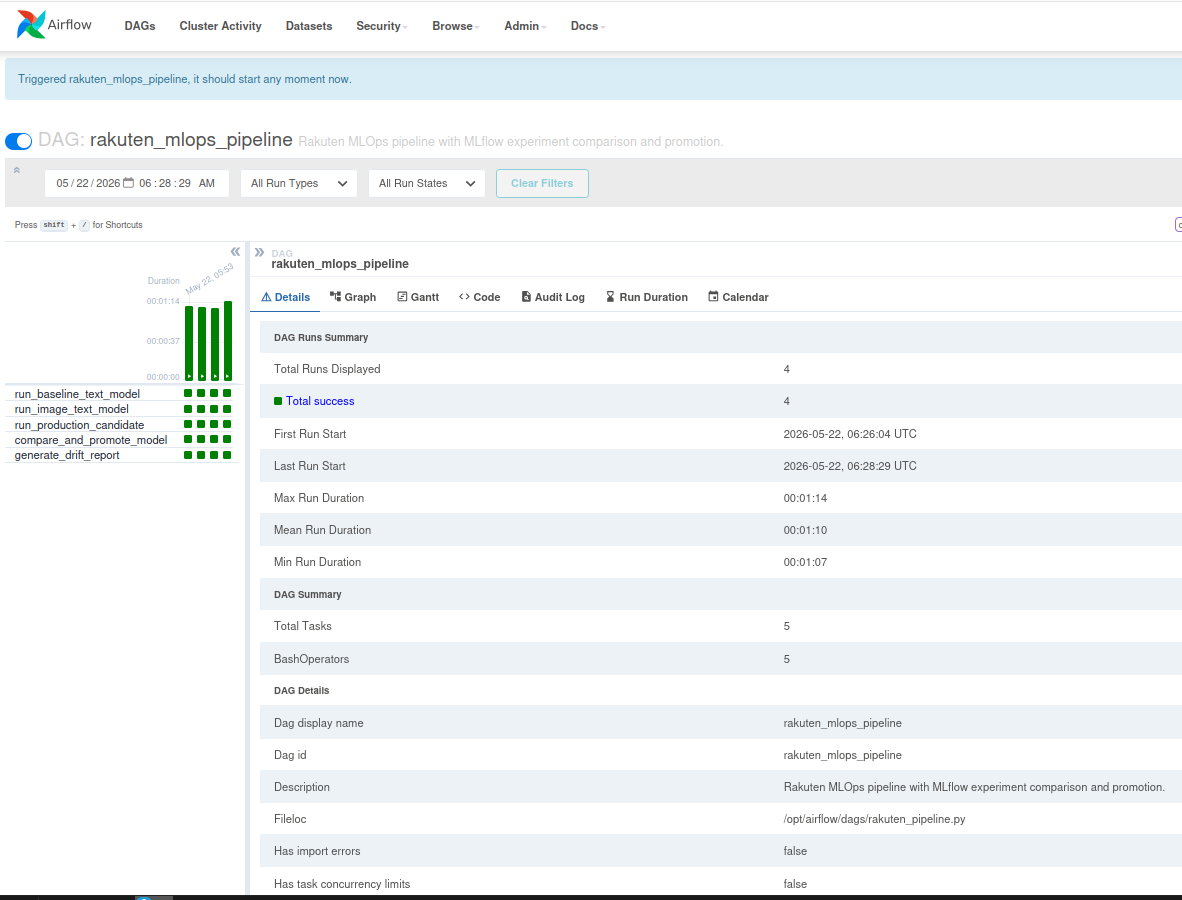
Airflow Pipeline Overview
End-to-end orchestration pipeline managed with Apache Airflow.
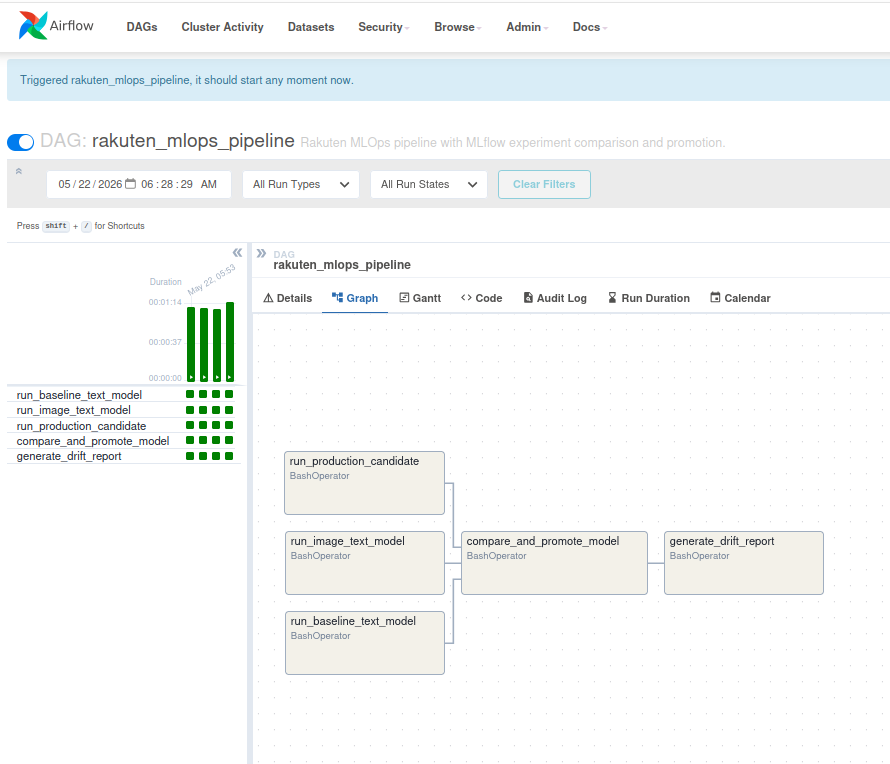
Airflow Graph View
Task dependencies and orchestration workflow for automated MLOps execution.
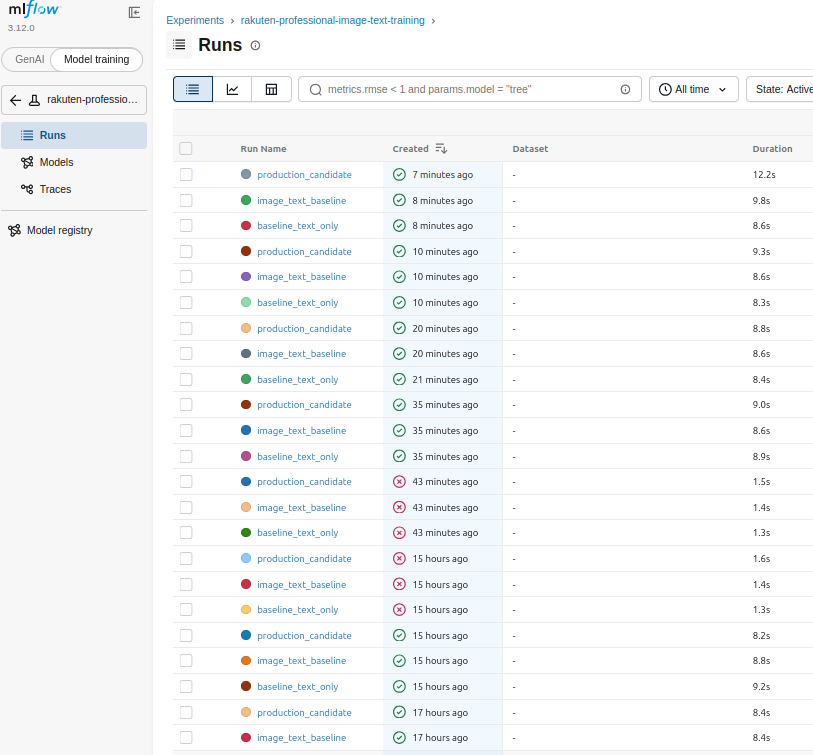
MLflow Experiment Tracking
Experiment tracking with multiple model training runs and metrics.
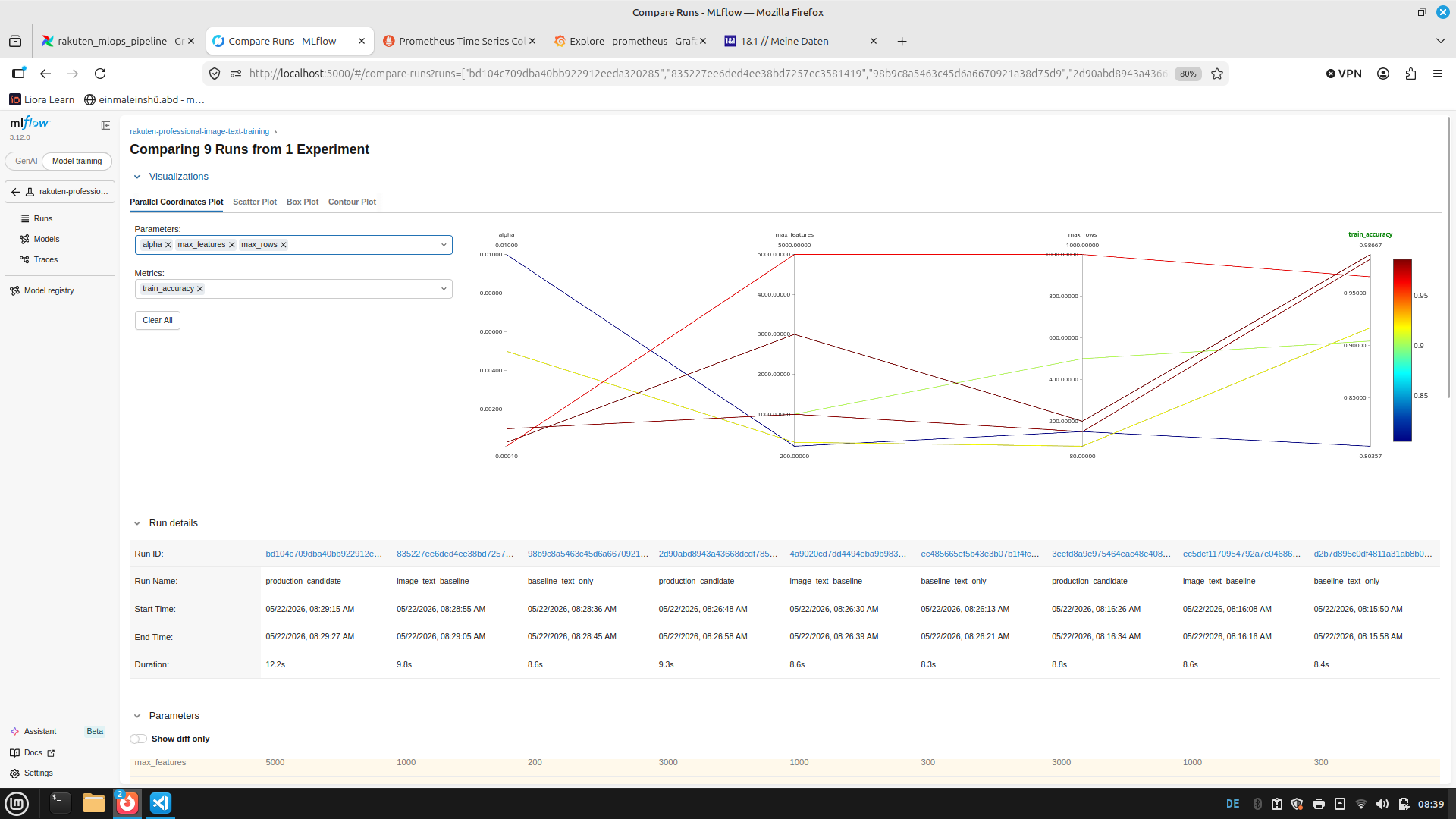
MLflow Compare View
Comparison of multiple candidate models and evaluation metrics.
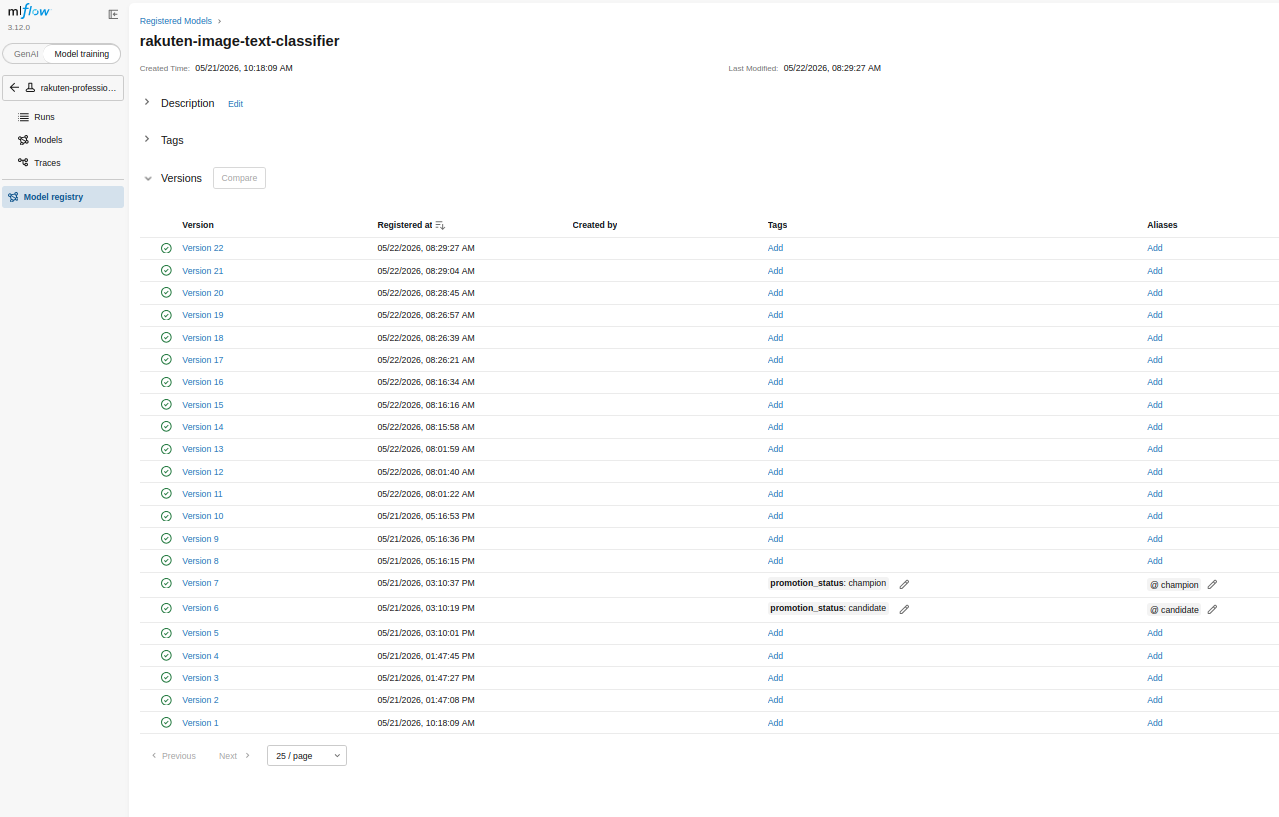
MLflow Model Registry
Champion/candidate model lifecycle management using MLflow Registry.
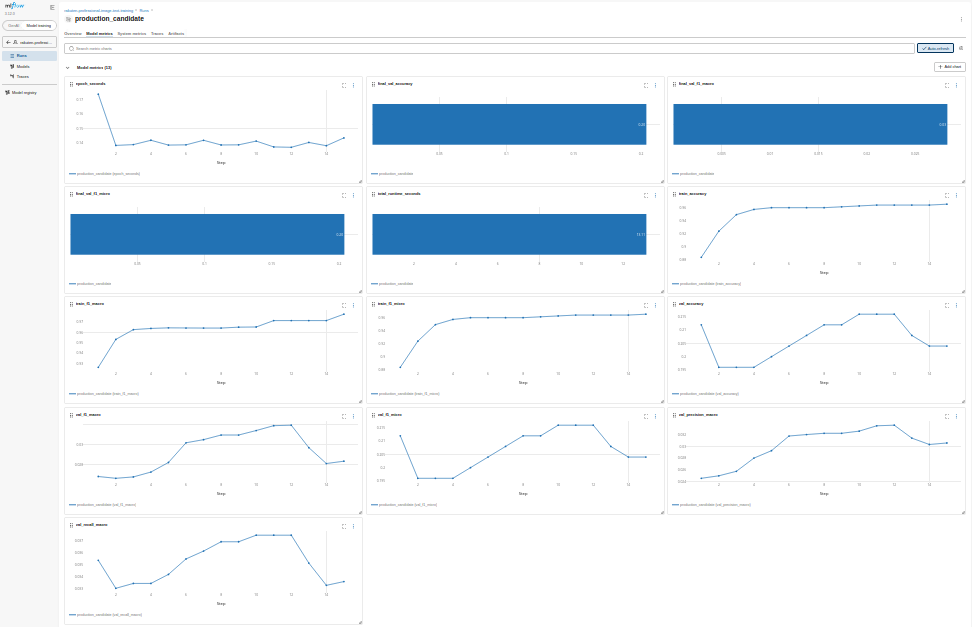
Single Run Metrics
Detailed training metrics and epoch progression for a single run.
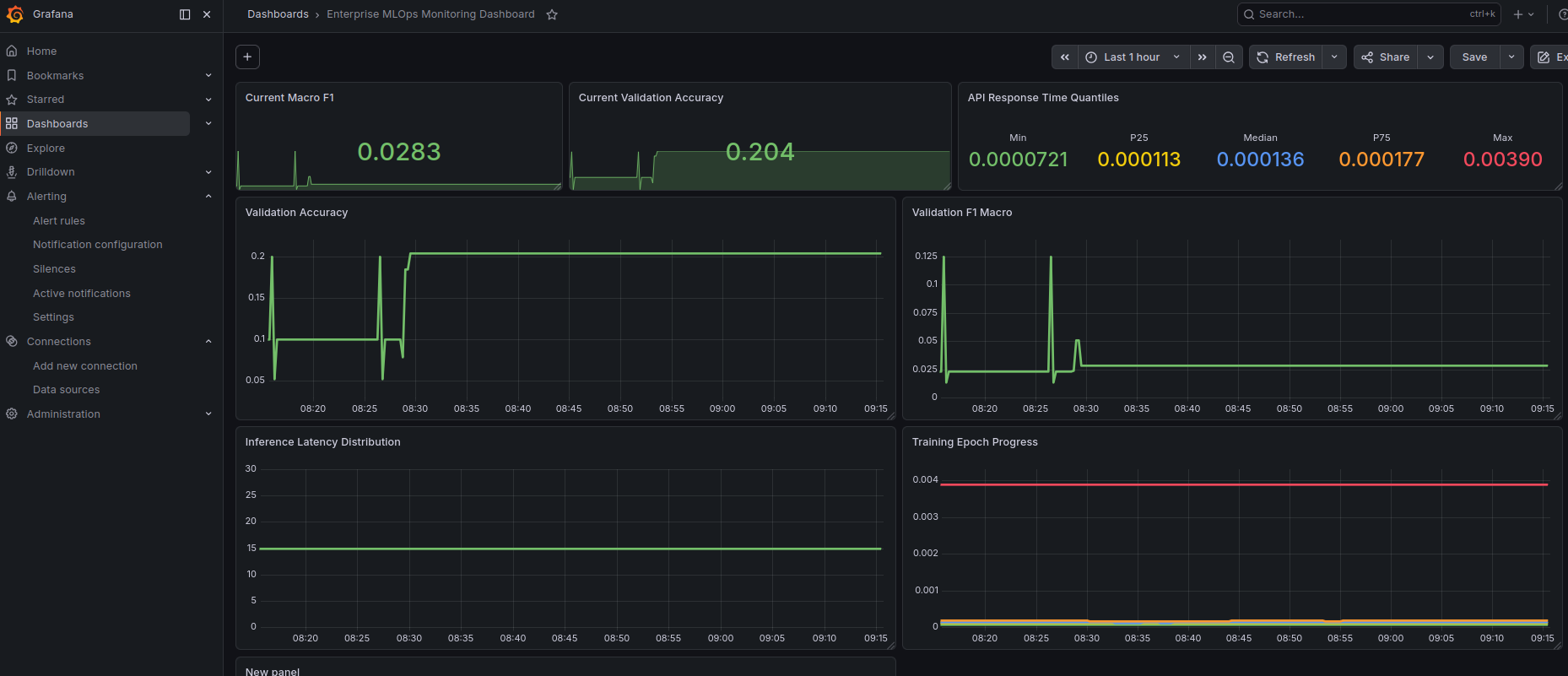
Grafana Monitoring Dashboard
Operational monitoring dashboard for training metrics and observability.
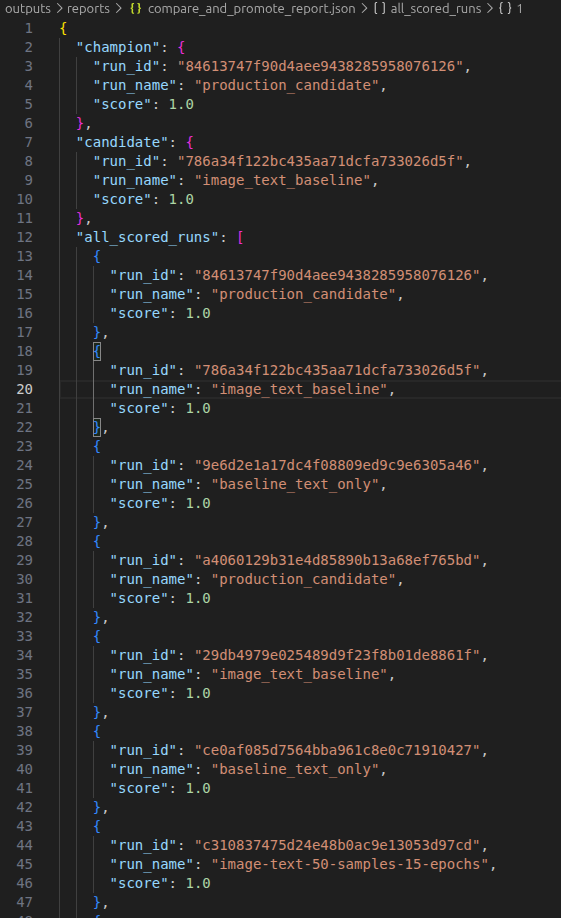
Compare & Promote Report
Automated champion/candidate evaluation and promotion workflow.
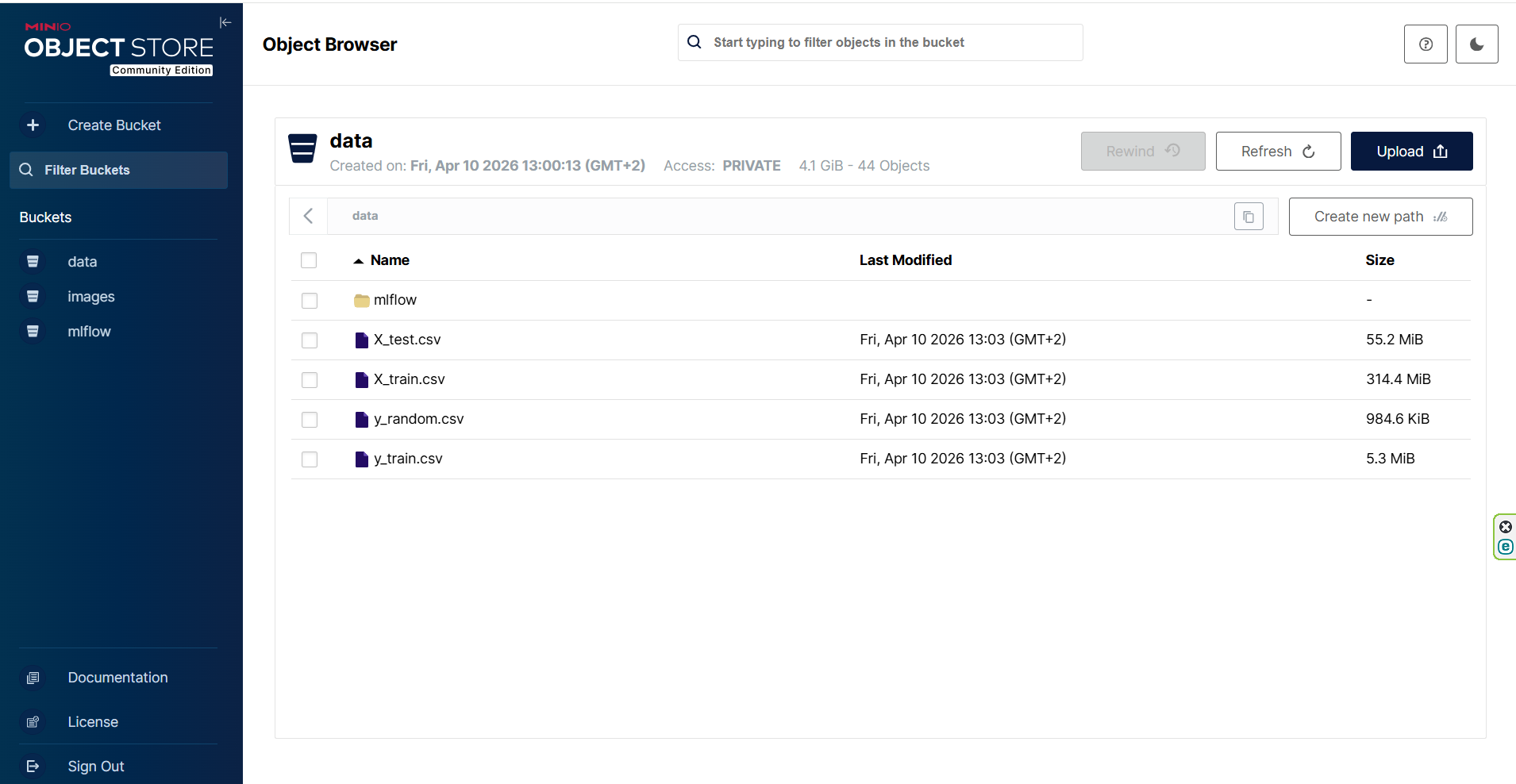
MinIO Data Storage
Object storage layer used for datasets, artifacts and ML assets.
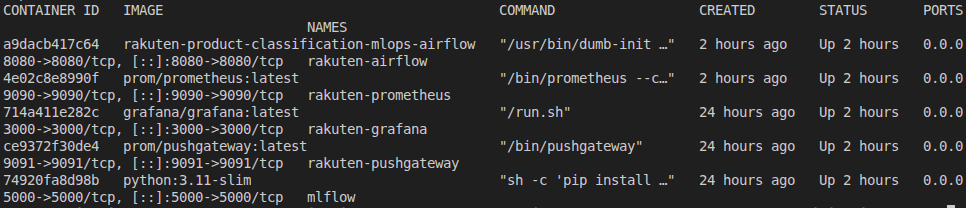
Docker Stack
Containerized MLOps stack including MLflow, Airflow, Grafana and API services.
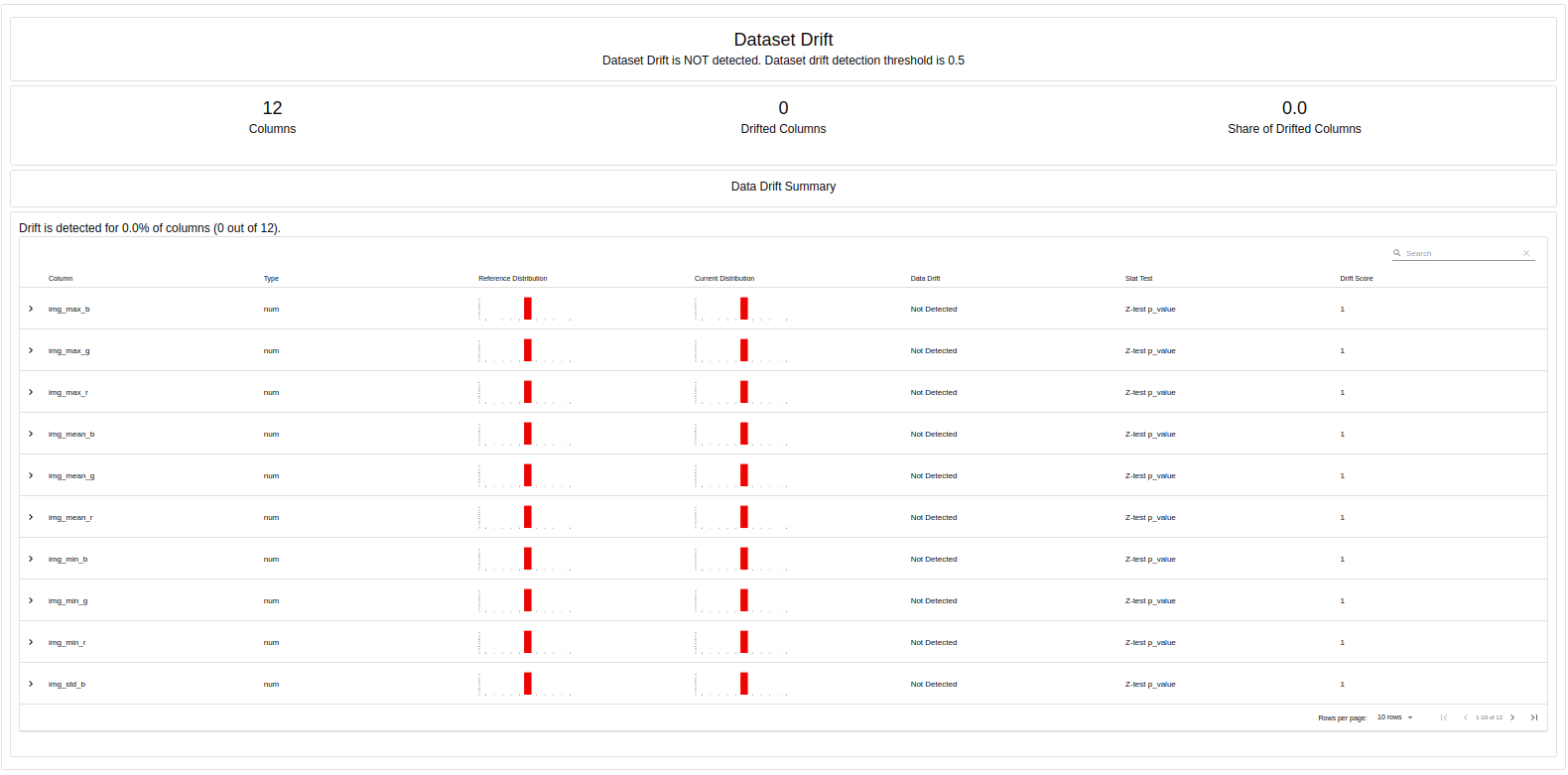
Evidently Monitoring Report
Data drift and monitoring reports generated with Evidently AI.
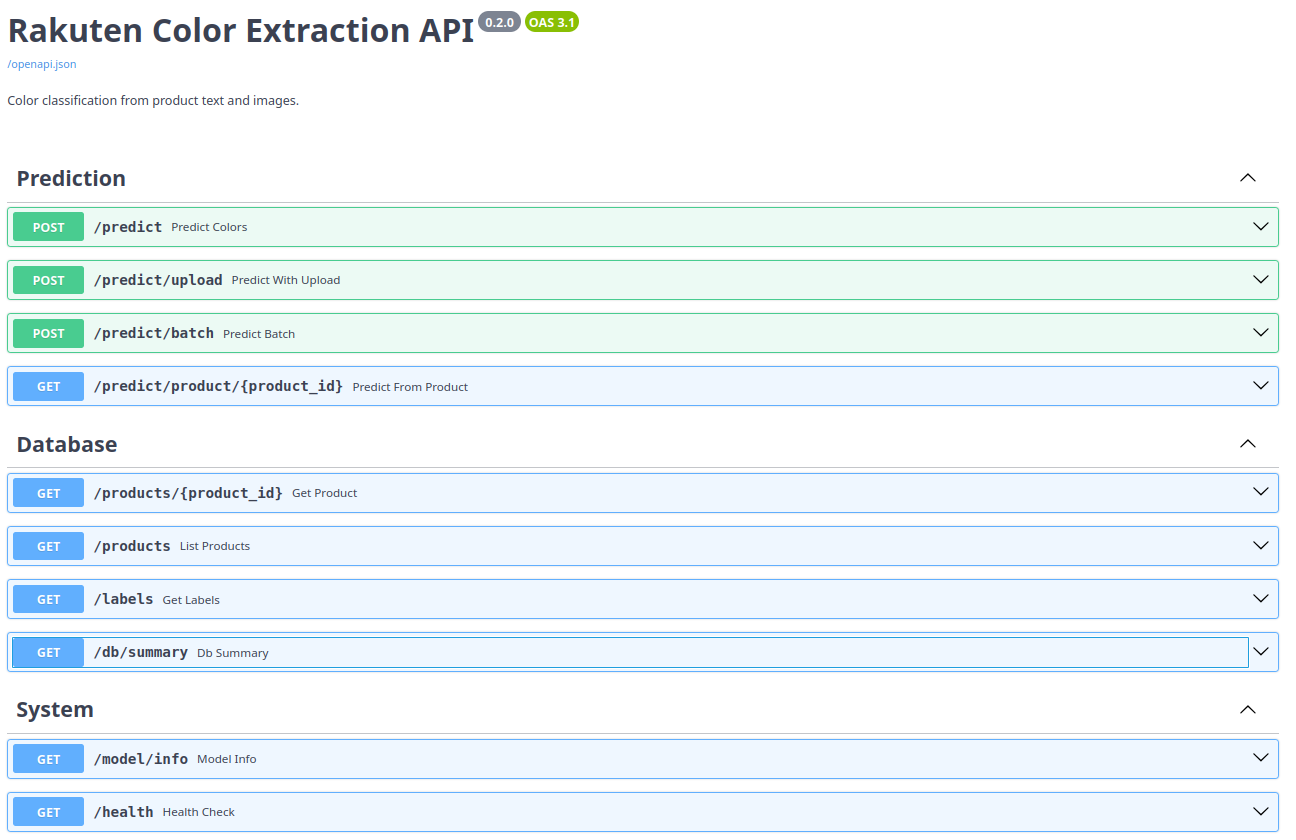
FastAPI Documentation
Inference API documentation for production-ready model serving.
MLOps Stack
Reproducible, monitored and deployment-ready
Model Lifecycle
Controlled movement from experiment to serving
Ingest & Prepare
Product metadata, labels and image assets are prepared for reproducible model training.
Train & Track
Training runs are logged in MLflow with parameters, metrics and artifacts.
Compare & Promote
Models are compared and promoted through Champion / Candidate registry logic.
Serve & Monitor
The selected model is exposed via FastAPI and prepared for monitoring workflows.
MLflow Workflow
Experiment tracking and model comparison
Training runs are tracked with parameters, metrics and artifacts. This makes experiments comparable, reproducible and suitable for structured model selection.
Registry Logic
Champion / Candidate lifecycle
The platform demonstrates how models can move from experiment to controlled registry stages, supporting promotion decisions and production-readiness.
Selected Code Highlights
Implementation excerpts
Selected short snippets show the engineering approach behind API deployment, experiment tracking and model lifecycle control.
FastAPI prediction endpoint
The API layer exposes model inference to applications, dashboards or workflow tools.
@app.post("/predict/upload")
async def predict_upload(file: UploadFile):
    image = await file.read()
    prediction = model_service.predict(image)

    return {
        "label": prediction.label,
        "confidence": prediction.confidence,
        "model_version": model_service.version,
    }
MLflow experiment logging
Training runs are tracked with parameters and metrics for transparent model comparison.
with mlflow.start_run():
    mlflow.log_param("model_type", "multimodal_classifier")
    mlflow.log_param("data_fraction", data_fraction)

    mlflow.log_metric("micro_f1", micro_f1)
    mlflow.log_metric("macro_f1", macro_f1)

    mlflow.sklearn.log_model(model, "model")
Registry promotion logic
Promotion logic supports controlled movement from candidate model to champion model.
if candidate.micro_f1 > champion.micro_f1:
    client.set_registered_model_alias(
        name="rakuten-product-classifier",
        alias="Champion",
        version=candidate.version,
    )
Monitoring & Drift Detection
Built for operational visibility
The monitoring layer is designed around production AI needs: service health, prediction quality, model performance indicators and drift detection.
Deployment Layer
FastAPI inference service
The model is exposed through an API layer, making it usable by applications, dashboards or automated workflows instead of being locked inside notebooks.
Business Value
Why this matters beyond the model
Technologies
Implemented stack
AI Systems · MLOps · Deployment
Need a production-ready AI workflow?
MSC Intelligent Systems helps companies move AI from prototype to reliable systems: data pipelines, model lifecycle, APIs, monitoring and operational integration.